How to Choose the Best Kitchen Countertop: Granite, Quartz, Marble & More
Every kitchen tells a story. Your countertops are the foundation—where pancakes flip, homework gets done, and memories are made. Choosing the right surface isn’t just about looks. It’s about how you live, cook, and gather.
At Kitchen Pickers, we know the stakes. A kitchen_remodeling project is a big leap, and the path to the perfect countertop can feel like a maze. Let’s clear the fog and put the right facts at your fingertips.
Weighing Your Options: The Heart of Kitchen Countertop Choices 🍳
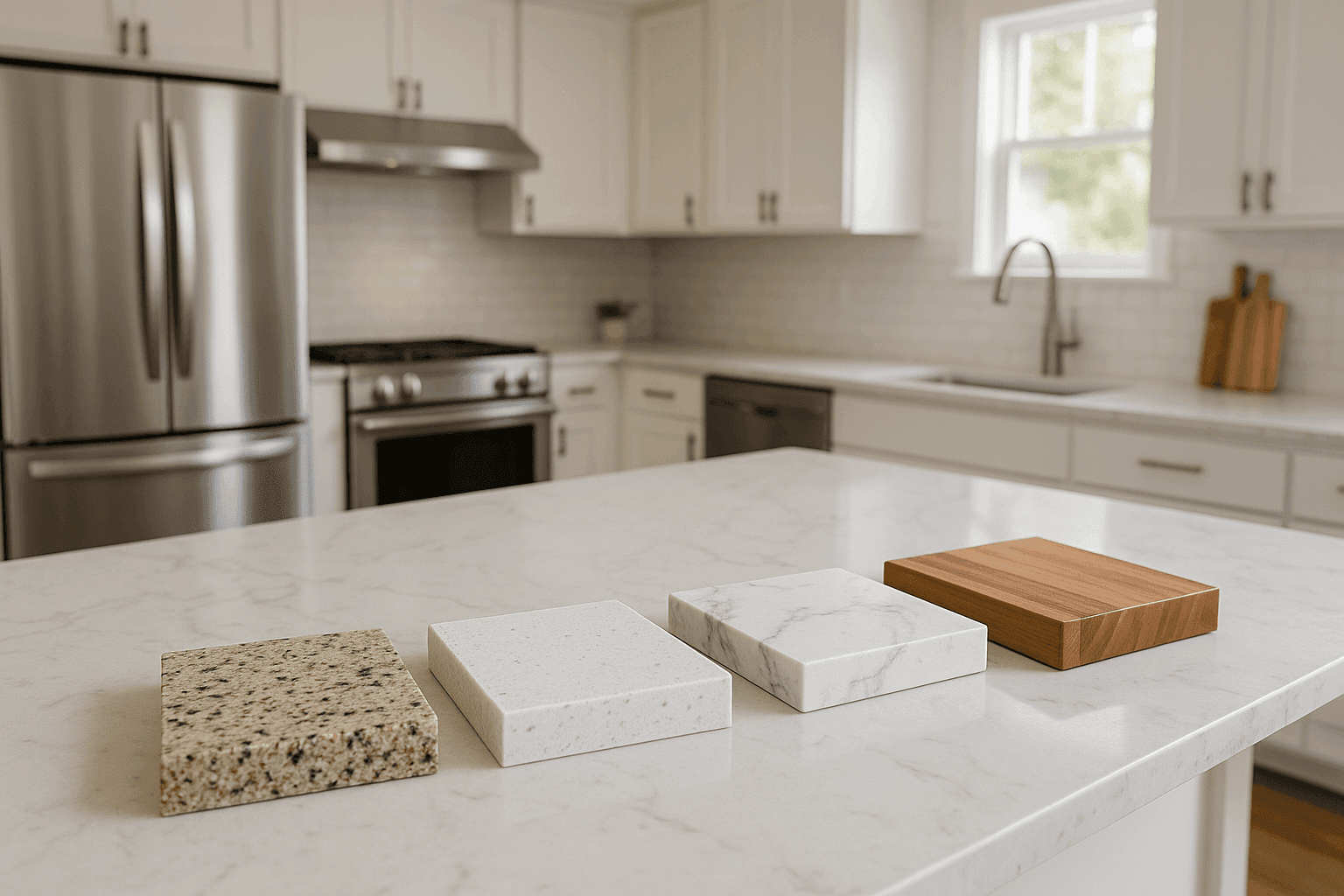
Picture this: You’re standing in a showroom, running your hand over cool granite, glossy quartz, sleek marble, and warm butcher block. Each surface whispers a different promise. But which one stands up to your busy mornings, messy dinners, and everything in between?
It’s not just a question of beauty. Countertops must survive spills, scratches, and the test of time. Here’s what you need to know to choose wisely.
Granite Countertops: Nature’s Armor
Granite is the classic workhorse in kitchen_remodeling. It’s quarried from the earth, each slab a unique fingerprint of color and pattern. Granite makes a statement—bold, strong, and timeless.
Pros:
- Highly durable; resists heat and scratches
- Wide variety of colors and natural patterns
- Adds significant resale value to your home
Cons:
- Needs sealing to prevent stains
- Visible seams in large installations
- Can chip if heavy items are dropped
Care Routine:
Use a soft cloth and mild soap. Wipe spills quickly (especially wine, oils, and acids). Reseal every 1–2 years for best protection. Avoid harsh chemicals.
Family Use:
Perfect for busy families who cook often and want a surface that can take a beating. Just be aware of the need for regular sealing.
Quartz Countertops: Reliable & Low-Maintenance
Quartz countertops blend natural quartz crystals with resin, creating a non-porous, uniform surface. If you want the look of stone without the upkeep, quartz is a steady choice.
Pros:
- Non-porous—resists stains and bacteria
- No sealing required
- Wide range of colors, patterns, and finishes
Cons:
- Less heat-resistant than granite
- Direct sunlight can fade colors over time
- Seams may be visible in larger surfaces
Care Routine:
Wipe with a damp cloth and gentle cleanser. Avoid placing hot pots directly on the surface. No sealing needed.
Family Use:
Ideal for families who want easy cleaning and don’t want to fuss with maintenance. Great for homes where spills are frequent.
Marble Countertops: Elegance with a Delicate Touch
Marble is the showstopper—a swirl of soft veining, cool to the touch, high on drama. It’s the countertop equivalent of a white linen shirt: stunning, but needs a little extra care.
Pros:
- Luxurious, timeless appearance
- Stays naturally cool—excellent for baking
- Adds high-end appeal and resale value
Cons:
- Prone to scratches and staining (especially from acids like lemon juice)
- Requires frequent sealing and gentle treatment
- Can etch from heavy use
Care Routine:
Wipe spills immediately. Use pH-neutral cleaners. Reseal every few months. Never cut directly on marble.
Family Use:
Best for light use kitchens or households passionate about baking. Not ideal for kids’ crafts or homes where spills are common.
Butcher Block Countertops: Warmth & Character
Butcher block brings a warm, organic feel to the kitchen—think farmhouse tables and fresh bread. It’s easy on knives but asks for a little love in return.
Pros:
- Warm, inviting look
- Can be sanded and refinished
- Gentle on glassware and knives
Cons:
- Susceptible to water damage, stains, and scratches
- Needs regular oiling to prevent drying and cracking
- Can harbor bacteria if not maintained
Care Routine:
Wipe up water immediately. Oil regularly with food-safe mineral oil. Sand out light scratches as needed.
Family Use:
Great for those who love a cozy, lived-in kitchen. Not for those who want a “worry-free” surface.
Solid Surface Countertops: Seamless Simplicity
Solid surface materials (like Corian) offer a smooth, modern look with invisible seams. They’re the chameleons of the countertop world—easy to shape, repair, and customize.
Pros:
- Invisible seams; integrated sinks available
- Repairable—scratches can be buffed out
- Non-porous and stain-resistant
Cons:
- Less heat and scratch-resistant than stone
- Can be damaged by sharp objects and hot pans
- Fewer “natural stone” patterns
Care Routine:
Clean with soapy water or a mild cleaner. Use cutting boards and trivets. Buff out minor scratches if they appear.
Family Use:
Perfect for those who want a modern look, easy cleaning, and don’t mind a bit of routine care.
Matching Countertops with Backsplashes and Cabinetry 🎨
Choosing the right countertop is only half the battle. For a kitchen that feels pulled together, balance is key.
- Contrast or Coordinate: If your cabinets are dark, a light countertop (like white quartz or marble) creates a fresh, open look. Dark countertops against white cabinets make a dramatic statement.
- Backsplash Harmony: Glass Backsplashes near you can add sparkle and depth—just make sure the patterns don’t clash with your countertop. Stainless steel backsplashes pair well with most surfaces for a sleek, contemporary vibe.
- Texture: Mix smooth (quartz) with textured (butcher block) for visual interest.
- Avoid Overcrowding: Let one element be the star—if your countertop is bold, keep the backsplash simple.
A good design consultation can help you see the big picture before making final choices.
Durability, Stain Resistance & Family Life
- Cooking Habits: If you cook daily and use lots of pots and pans, granite or quartz may be your best bet.
- Young Kids or Entertaining: Easy-clean, stain-resistant surfaces reduce stress.
- Resale Value: Granite, quartz, and marble often boost resale value, but only if they’re in great shape.
Cleaning, Care & Preventive Maintenance 🧽
- Wipe spills quickly—especially acids and oils.
- Use cutting boards to protect all surfaces.
- Reseal stone countertops as recommended.
- Oil butcher block regularly.
- Avoid abrasive cleaners on any surface.
Reference: The National Kitchen & Bath Association (NKBA) recommends following manufacturer guidelines for care and cleaning to maximize longevity and safety.
Weighing Costs & Time
- Granite: Mid to high price; professional installation recommended.
- Quartz: Similar to granite, sometimes slightly higher.
- Marble: Among the most expensive, especially for rare varieties.
- Butcher Block: Mid-range; ongoing maintenance adds to long-term cost.
- Solid Surface: Usually more affordable; repairable but not as tough as stone.
Installation can often be completed in a day or two, but custom work, permitting, and specialty installations (such as integrated sinks or unique backsplashes) may extend the timeline.
DIY or Call the Pros?
You might be tempted by a DIY install video, but most countertop materials are heavy, brittle, or require specialized tools. Professional installation ensures a safe, level, code-compliant fit—vital for plumbing, electrical, and ventilation components.
If you’re considering complex features (like waterfall edges, integrated sinks, or custom cabinetry), expert project management makes all the difference. Mistakes can be costly to fix.
What Pros Do On Arrival
- Confirm precise measurements and layout
- Double-check support for heavy surfaces
- Inspect plumbing, electrical, and ventilation for code compliance
- Plan for seams, cutouts, and backsplashes
- Handle safe removal and disposal of old countertops
- Execute a clean, secure installation—no wobbles, no gaps
Post-construction inspection ensures everything is up to standard, and your kitchen is ready for daily life.
Preventing Common Problems
- Use trivets under hot pans (especially on quartz and solid surface)
- Clean up acidic spills (wine, tomato sauce, citrus) right away
- Don’t sit or stand on countertops—they’re not built for it
- Regularly check for wear, cracks, or water damage
Professional maintenance (like resealing stone) pays off in the long run.
Costs & Time Factors
Expect to pay more for rare stones or complex installations. Permitting may be required for certain plumbing or electrical changes. Most projects can be completed in a week or less, but custom orders or specialty finishes may extend the timeline.
When It’s an Emergency
If you spot a major crack, water leak, or electrical hazard, stop using that area and call a qualified kitchen_remodeling pro immediately. Delaying repairs can cause bigger headaches down the line.
FAQ
Which countertop is best for families with young kids?
Quartz is a top pick for busy families, thanks to its stain resistance and easy care.
How often should stone countertops be resealed?
Granite: every 1–2 years. Marble: every few months, depending on use.
Can you mix surfaces in one kitchen?
Absolutely. Many designers recommend mixing—for example, butcher block on the island with quartz on perimeter counters for both function and style.
What’s the best way to match a new countertop to existing cabinets?
Bring a cabinet door or paint chip to the showroom. Lighting changes color perception—seeing samples side by side helps.
Local & Seasonal Considerations 🌦
- Humidity: Wood (butcher block) can swell or shrink with seasonal humidity. Regular oiling helps.
- Temperature Swings: Stone holds up well, but sudden extreme changes (like placing a hot pan on cold marble) can cause cracks.
- Code Compliance: Always check local permitting requirements for electrical, plumbing, and ventilation work.
The International Residential Code (IRC) and National Electrical Code (NEC) offer guidelines for safe installation—your pro should follow these standards.
Choosing a countertop is about more than trends. It’s about daily life, home value, and the memories you’ll make. At Kitchen Pickers, our design consultation and professional installation ensure your kitchen_remodeling project is both stylish and sensible, from Glass Backsplashes near you to a flawless island centerpiece.
Call Kitchen Pickers now — or reach us anytime at 877-318-7964 .